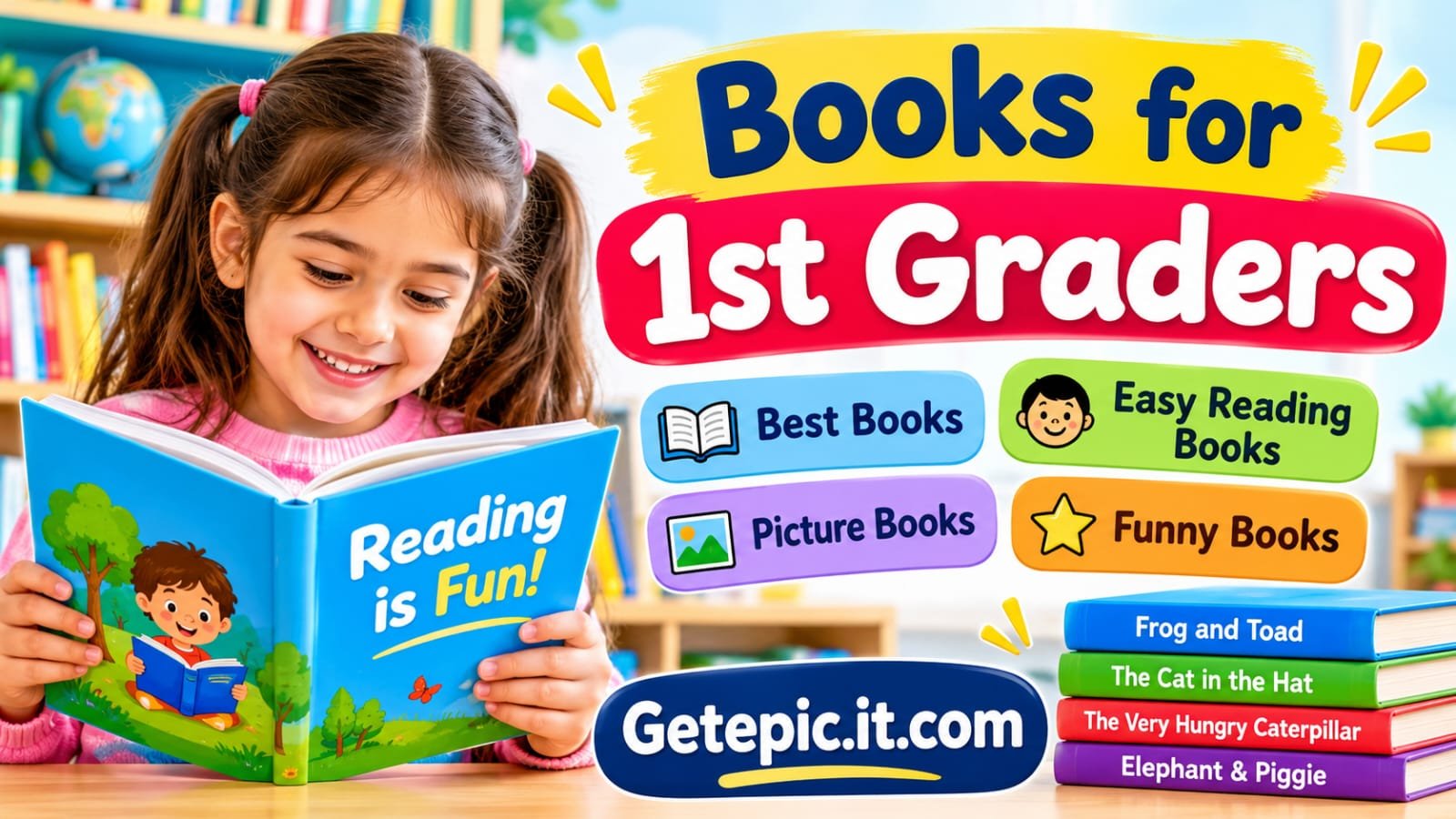
Books for 1st Graders: 25+ Great Books to Build Reading Skills and Confidence
Choosing the right books for 1st graders can make a big difference in how children learn to read. At this age, most children are beginning to recognize familiar words, sound out new words, and understand short stories. Some can read simple books independently, while others still need help from a parent or teacher.
The best approach is to give children books that match their reading ability and interests. A short story about animals, a funny adventure, or a colourful picture book can encourage a child to pick up a book without being asked.
For parents and teachers, this guide covers some of the best books for first graders, including beginner reading books, picture books, funny stories, and easy chapter books. It also explains how to choose suitable books and help children develop stronger reading habits.
Best Books for 1st Graders
First graders are usually around 6 to 7 years old. However, children do not all learn at the same speed. One child may enjoy reading short sentences independently, while another may prefer listening to longer stories.
Here are some popular books that offer enjoyable stories and useful reading practice.
1. Frog and Toad Are Friends by Arnold Lobel
Frog and Toad Are Friends is an excellent choice for children who are starting to read short stories. It follows two friends, Frog and Toad, through five simple adventures.
The stories explore friendship, patience, kindness, and everyday experiences. The language is accessible, and the illustrations help children understand what is happening.
For example, parents can ask a child why Frog and Toad help each other or which character they like most. These small conversations help children think about the story rather than simply read the words.
2. The Cat in the Hat by Dr. Seuss
Children who enjoy funny and unusual stories may like The Cat in the Hat. Written by Dr. Seuss, this book introduces a mischievous cat who visits two children and turns an ordinary day into an exciting adventure.
The book uses rhyming words and repeated language. These features make it enjoyable for young readers and give them opportunities to notice sound patterns.
Parents can read the first few pages aloud and let children repeat familiar lines. This makes reading more enjoyable and helps develop confidence.
3. Green Eggs and Ham by Dr. Seuss
Green Eggs and Ham is another popular choice for young readers. The story follows Sam-I-Am as he tries to convince another character to try a new food.
Its repeated phrases and simple vocabulary make it useful for reading practice. Children can quickly become familiar with the words and start joining in.
It also provides a simple lesson about trying new things before deciding whether they are enjoyable.
4. The Very Hungry Caterpillar by Eric Carle
This colourful picture book follows a caterpillar as it eats different foods and eventually becomes a butterfly.
The story introduces children to counting, food names, days of the week, and the life cycle of a butterfly. Its illustrations make it especially useful for children who learn through pictures.
A parent can ask, “What did the caterpillar eat on Tuesday?” or “What happened after it made a cocoon?” Such questions help children remember details and understand the sequence of events.
5. Biscuit by Alyssa Satin Capucilli
The Biscuit series is a good option for children who are developing their independent reading skills. Biscuit is a small puppy who gets involved in simple everyday adventures.
The stories use familiar situations, short sentences, and repeated expressions. Children who enjoy animals may find it easier to stay interested in these books.
Teachers can also use Biscuit stories for short reading sessions where students take turns reading sentences aloud.
Easy Reading Books for 1st Graders
Some children are still learning how letters and sounds work together. They may recognize familiar words but struggle when they meet a new word.
For these readers, books with short sentences, familiar vocabulary, and supportive illustrations are helpful.
Here are some good options:
- Bob Books: These beginner reading books use simple words and short sentences to help children practise phonics and blending sounds.
- Go, Dog. Go! by P. D. Eastman: A fun story with simple language, repeated phrases, and colourful illustrations.
- Hop on Pop by Dr. Seuss: A rhyming book that introduces children to simple word patterns.
- Little Bear by Else Holmelund Minarik: A collection of gentle stories about a young bear and his family.
- Elephant & Piggie by Mo Willems: An entertaining series that uses speech bubbles, simple dialogue, and expressive illustrations.
For example, a child learning the word “sun” can practise sounding out the letters before reading a sentence containing that word. A book with familiar words gives the child more opportunities to practise without feeling overwhelmed.
It is important to choose books that children can read with reasonable accuracy. A book does not become better simply because it contains harder words.
Picture Books for 1st Graders
Picture books are still valuable when children begin first grade. They help young readers connect written words with images, understand story events, and develop their imagination.
Some picture books also introduce ideas that may be difficult to explain through simple text alone.
Consider these options:
Where the Wild Things Are by Maurice Sendak: This imaginative story follows Max as he travels to a place filled with mysterious creatures. It encourages children to talk about feelings, imagination, and behaviour.
The Snowy Day by Ezra Jack Keats: Peter explores his neighbourhood after a snowfall. The familiar activities make it easy for children to connect the story with their own experiences.
Don’t Let the Pigeon Drive the Bus! by Mo Willems: This funny story encourages children to respond to the pigeon as he tries to persuade readers to let him drive a bus. It is especially enjoyable as a shared reading activity.
Corduroy by Don Freeman: A teddy bear searches for a missing button and hopes to find a home. The story introduces friendship, belonging, and kindness.
Parents can discuss the illustrations before reading each page. For instance, they can ask children what they think a character might do next. This encourages prediction and active thinking.
Funny Books for 1st Graders
Funny stories can make reading feel like entertainment rather than schoolwork. They are particularly useful for children who are not yet interested in sitting with a book for long periods.
These books are worth considering:
Hi! Fly Guy by Tedd Arnold: Buzz finds a fly that he wants to keep as a pet. The funny situation, pictures, and simple storytelling make it appealing to young readers.
Click, Clack, Moo: Cows That Type by Doreen Cronin: Farm animals use a typewriter to communicate with the farmer and make unusual demands. It introduces humour through an entertaining farm story.
Don’t Let the Pigeon Drive the Bus! by Mo Willems: Its funny dialogue encourages children to participate while reading.
The Day the Crayons Quit by Drew Daywalt: Different crayons write letters to their owner to explain why they are unhappy. It introduces children to humour, colours, and creative storytelling. It is especially suitable for shared reading.
When choosing funny books, consider the child’s interests. A child who loves animals may enjoy Fly Guy, while someone who likes colourful illustrations may prefer stories about crayons.
Chapter Books for 1st Graders
Some first graders become comfortable reading short stories and start looking for something longer. This is a good time to introduce beginner chapter books.
Chapter books have longer stories divided into smaller sections. Many books for young readers include illustrations to make the reading experience easier.
Here are some options:
1. Henry and Mudge by Cynthia Rylant
This series follows a young boy named Henry and his large dog, Mudge. The stories explore friendship, family life, and everyday adventures.
2. Nate the Great by Marjorie Weinman Sharmat
Nate is a young detective who solves small mysteries. The simple detective plots encourage children to follow clues and think about what might happen next.
3. Princess in Black by Shannon Hale and Dean Hale
This series follows a princess who secretly becomes a superhero. It combines humour, adventure, and illustrations, making it an enjoyable introduction to longer stories.
4. Mercy Watson by Kate DiCamillo
Mercy is a lovable pig who becomes involved in amusing adventures. The books feature colourful illustrations and a story structure that can help children build reading stamina.
5. Magic Tree House by Mary Pope Osborne
Jack and Annie discover a magical tree house that takes them to different places and historical periods. These books can interest children who enjoy adventure and learning about the world.
Not every first grader is ready to read these books alone. Parents can read a chapter with their child and gradually allow the child to take more responsibility as confidence improves.
Phonics Books for 1st Graders
Phonics books help children understand the relationship between letters and sounds. This is an important part of early reading development.
During first grade, children practise recognizing letter sounds, combining sounds to read words, and identifying common spelling patterns.
For example, a child may learn that the letters “c”, “a”, and “t” make the word “cat”. Later, the child can use the same skill to read other words with familiar sounds.
Some useful choices include:
- Bob Books Beginning Readers
- Usborne Very First Reading
- Now I’m Reading! by Nora Gaydos
- Scholastic decodable readers
- Flyleaf Emergent Readers
When using phonics books, allow children to sound out unfamiliar words instead of immediately telling them the answer. If they become stuck, help them break the word into smaller sounds.
The goal is to build a skill they can use when reading other books.
Nonfiction Books for 1st Graders
Stories are important, but children should also have opportunities to read books about real things. Nonfiction books introduce facts, new vocabulary, and subjects that children may want to explore further.
For example, a child interested in animals may enjoy learning about elephants, butterflies, or sea creatures.
Some good nonfiction choices include:
National Geographic Kids Readers: These books introduce young readers to animals, nature, science, and the world around them.
From Seed to Pumpkin by Wendy Pfeffer: This book explains how a pumpkin grows from a seed. It is a useful choice for introducing plant life and simple science concepts.
We Are Water Protectors by Carole Lindstrom: This illustrated story introduces children to the importance of protecting water and the natural world.
The Fantastic Undersea Life of Jacques Cousteau by Dan Yaccarino: Children can learn about ocean exploration and the life of an important underwater explorer.
Parents can make nonfiction reading more interesting by connecting a book to something children see in everyday life. After reading about plants, for example, a child could observe a small plant growing in a garden.
How to Choose the Right Books for 1st Graders
The right book should match a child’s current reading ability, interests, and attention span. Age recommendations are useful, but they should not be the only factor.
Start by looking at the words on the page. If a child can read most of the text without constant help, the book may be suitable for independent practice.
If the child struggles with almost every sentence, choose an easier book for independent reading and keep the harder one for reading together.
Another useful method is to consider the child’s interests. A student who loves dinosaurs may show more interest in a dinosaur book than a story about a character they do not know.
Also, look for:
- Clear and readable text.
- Illustrations that support the story.
- Short chapters or manageable sections.
- Familiar vocabulary mixed with a few new words.
- Interesting subjects that encourage questions.
For example, if a child enjoys football, a simple book about sports may encourage more reading than a book chosen only because it is recommended for first grade.
How Many Books Should a 1st Grader Read Each Day?
There is no single number of books that every first grader must read daily. Reading ability, book length, and the child’s comfort all make a difference.
A practical starting point is to spend around 15 to 20 minutes reading each day. This time can include independent reading, reading with a parent, and listening to a story.
For example, a simple routine could look like this:
- Spend five minutes reviewing familiar words.
- Read a short book together for five to ten minutes.
- Allow the child to choose a book for independent reading.
- Ask one or two questions about the story.
The important thing is to make reading a regular and enjoyable activity. If a child becomes tired, a shorter session is better than forcing them to continue.
Where Can Parents Find Books for 1st Graders?
Parents and teachers can find suitable books in public libraries, school libraries, local bookstores, and digital reading platforms.
Libraries are particularly helpful because children can explore different subjects without needing to purchase every book. Parents can also ask librarians for recommendations based on a child’s reading level.
For families who prefer digital reading, Epic offers a children’s digital reading platform with ebooks, audiobooks, and educational reading content. Parents and teachers can explore its available collection and select books that match a child’s interests and reading ability. Check the platform’s current access options and eligibility before choosing a plan.
Another useful option is Scholastic’s beginner reader book recommendations, which offers ideas for children who are developing independent reading skills.
Parents can also explore Common Sense Media’s book recommendations for first graders to discover books across different genres.
How Parents and Teachers Can Improve Reading Skills
Choosing good books is only one part of helping children become better readers. The way adults support reading can also influence a child’s confidence and interest.
One useful approach is shared reading. An adult reads a sentence or paragraph, and the child follows along. Then the child reads a familiar section independently.
For example, while reading Frog and Toad Are Friends, a parent can pause and ask, “What do you think Toad will do next?” The child can use details from the story to make a prediction.
It is also helpful to let children choose some of their own books. A child who selects a story about animals, space, or adventure may feel more interested in reading it.
Avoid correcting every small mistake immediately. Give the child a moment to sound out a word and try again. Praise the effort and progress rather than expecting perfect reading.
Teachers can use similar methods in the classroom by creating small reading groups and providing books at different reading levels.
Frequently Asked Questions
What are the best books for 1st graders?
Some popular choices include Frog and Toad Are Friends, The Cat in the Hat, The Very Hungry Caterpillar, Biscuit, and Elephant & Piggie. The best choice depends on the child’s reading ability and interests.
What level of books should a first grader read?
A first grader should generally practise with simple, age-appropriate books containing familiar words, short sentences, and supportive illustrations. Reading levels vary, so choose books based on the child’s actual skills rather than grade labels alone.
Are chapter books suitable for 1st graders?
Yes. Some first graders enjoy beginner chapter books such as Henry and Mudge and Princess in Black. Children who are not ready to read longer stories independently can enjoy them with adult support.
How can I help my first grader become a better reader?
Read together every day, practise phonics, introduce interesting books, and allow the child to read familiar stories again. Ask simple questions about the characters and events to build understanding.
Should first graders read picture books?
Yes. Picture books help children understand stories, learn vocabulary, recognize emotions, and develop imagination. They are useful for both independent and shared reading.
Are digital books good for first graders?
Digital books can be useful when selected carefully. Some platforms offer read-aloud features and illustrations that support young readers. However, children should also have opportunities to read printed books and practise away from screens.
How long should a first grader read each day?
Around 15 to 20 minutes can be a useful starting routine. The time can include reading independently, listening to stories, and reading with an adult. Adjust the routine according to the child’s attention and ability.
Final Thoughts
The best books for 1st graders are not necessarily the longest or most difficult ones. They are books that make children curious, help them practise reading, and give them confidence to try new words.
Start with simple stories, picture books, and phonics readers. As children become more comfortable, introduce funny stories, nonfiction books, and beginner chapter books.
Most importantly, make reading part of everyday life. A child who enjoys reading about favourite animals, interesting adventures, or familiar characters is more likely to keep exploring books and developing stronger reading skills.