Best Books for 4th Graders: 25 Picks Kids Will Want to Read
Fourth grade can be the year a child discovers the kind of reader they want to be. Some kids race through funny graphic novels, while others want dragons, mysteries, sports, true stories, or books about friendships that feel close to real life. The best choice is not always the longest or most advanced book. It is a book that gives the child a reason to keep turning pages.
This list mixes fiction, fantasy, humor, graphic novels, and nonfiction. It is designed for parents and teachers who want useful options, not a rigid reading-level ranking. A fourth grader’s age, interests, confidence, and maturity all matter, so use the suggestions as a starting point and preview titles when needed.
Best Books for 4th Graders Who Love Animals
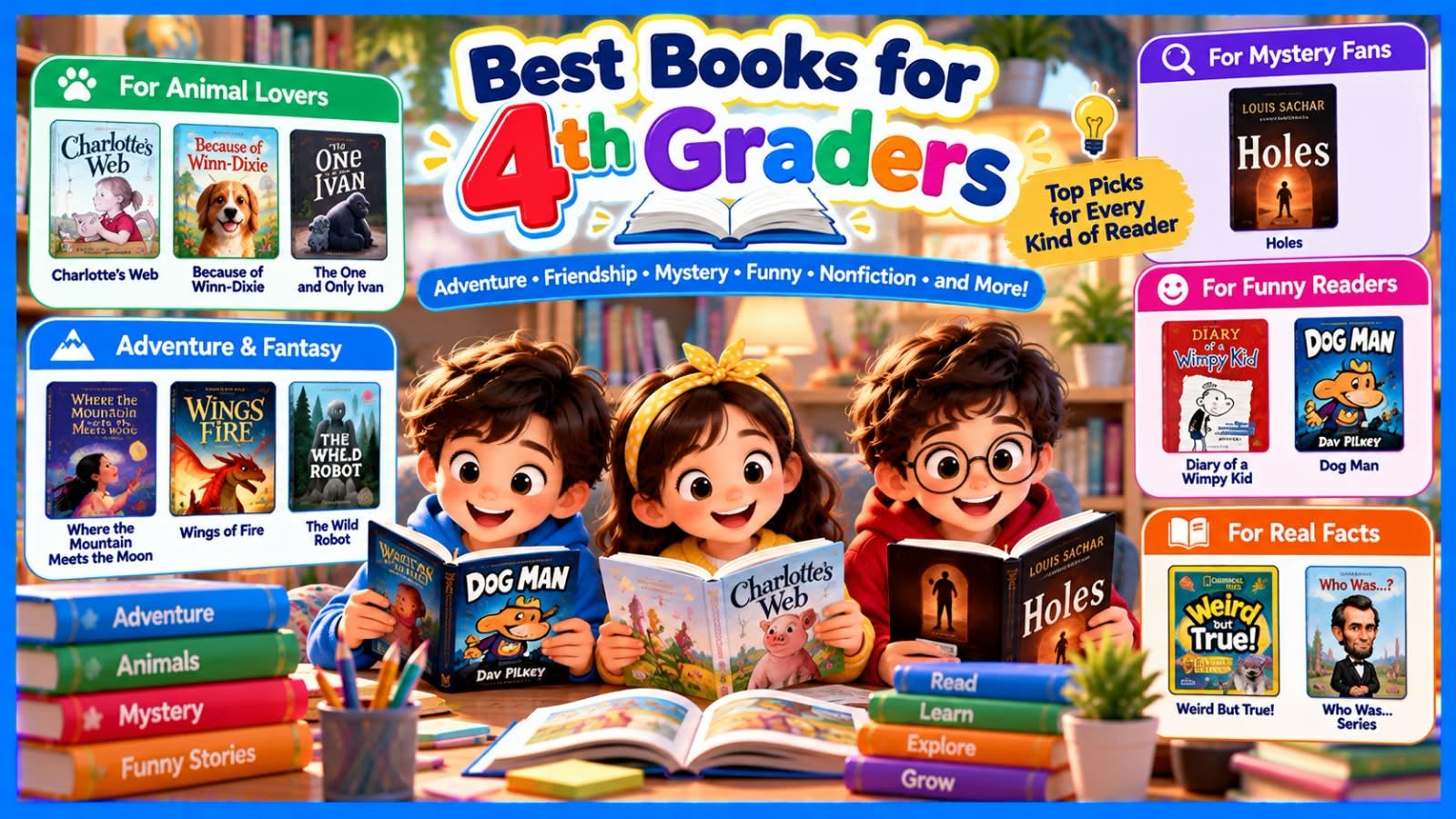
Charlotte’s Web by E. B. White. A gentle classic about Wilbur the pig and Charlotte, a clever spider who helps him. It opens conversations about friendship, loyalty, kindness, and loss.
Because of Winn-Dixie by Kate DiCamillo. Opal adopts a stray dog and gradually builds friendships in her Florida town. The story is warm, funny, and thoughtful about loneliness and community.
The One and Only Ivan by Katherine Applegate. Ivan is a gorilla living in a shopping-mall attraction. Told in short, accessible sections, the novel explores empathy, freedom, and the responsibility people have toward animals.
The Wild Robot by Peter Brown. Roz, a robot stranded on a wild island, learns to survive and care for the animals around her. It blends adventure with questions about nature and belonging.
Scholastic: Captivating Books Every Fourth Grade Classroom Needs:
Funny Books and Graphic Novels
Dog Man by Dav Pilkey. A comic-style series with silly humor, action, and visual storytelling. It can appeal to children who enjoy cartoons and want a less text-heavy reading experience.
The Bad Guys by Aaron Blabey. A group of supposed villains tries to do good deeds. Fast pacing, comic panels, and jokes make this a strong option for readers who like humorous adventures.
Diary of a Wimpy Kid by Jeff Kinney. Greg Heffley’s illustrated journal follows school, family, and friendship mishaps. Its diary format and drawings can make the pages feel approachable.
The One and Only Bob by Katherine Applegate. This companion to The One and Only Ivan follows Bob, a scrappy dog, in a story about friendship, memory, and finding courage.
Adventure and Fantasy Books
Wings of Fire: The Dragonet Prophecy by Tui T. Sutherland. The first book in a dragon-fantasy series about five young dragons caught up in a prophecy. It suits readers who enjoy action, imagined worlds, and a longer series to follow.
Where the Mountain Meets the Moon by Grace Lin. A fantasy inspired by Chinese folklore. Minli sets off on a journey to change her family’s fortunes and meets characters who share stories along the way.
The Wild Robot Escapes by Peter Brown. The next Roz adventure continues the mix of technology, animals, suspense, and questions about home. Read The Wild Robot first for the character background.
The Miraculous Journey of Edward Tulane by Kate DiCamillo. A china rabbit travels through different hands and experiences loss, love, and change. It is a thoughtful choice for readers ready for a more reflective story.
Mystery, Suspense, and Real-Life Stories
Holes by Louis Sachar. Stanley Yelnats is sent to Camp Green Lake, where the boys dig holes every day. Strange patterns connect the camp’s rules to a mystery from the past.
The Lemonade War by Jacqueline Davies. Siblings Evan and Jessie compete to sell lemonade. The story introduces money, planning, sibling rivalry, and different ways of solving problems.
Who Was? biographies. This nonfiction series introduces notable people through short chapters and illustrations. It can help children explore history, science, sports, and the arts.
Who Would Win? by Jerry Pallotta. These nonfiction books compare animals using facts about size, behavior, and adaptations. They work well for kids who love wildlife and quick facts.
More Great Choices for Different Interests
The Tale of Despereaux by Kate DiCamillo. A mouse, a princess, and a castle form the center of a fairy-tale-style adventure about bravery and forgiveness.
The Penderwicks by Jeanne Birdsall. Four sisters spend a summer full of new friendships and small adventures. A good option for readers who enjoy family stories.
Frindle by Andrew Clements. A school project about words turns into a funny story about language, creativity, and a student who challenges a teacher.
Ways to Make Sunshine by Renée Watson. Ryan Hart navigates family changes and everyday challenges with humor and optimism.
Front Desk by Kelly Yang. Mia helps her parents manage a motel while facing unfairness and learning to speak up. It includes themes of family, belonging, and perseverance.
The First Rule of Punk by Celia C. Pérez. Malú uses music, art, and self-expression to figure out where she fits in. It can connect with readers who like creative characters.
The Invention of Hugo Cabret by Brian Selznick. A richly illustrated mystery about a boy living in a Paris train station. The blend of pictures and text offers a different reading rhythm.
The Wild Book by Margarita Engle. A verse novel about a girl who struggles with reading and discovers the power of stories. It is a thoughtful option for readers who like poetry and family history.
Books for 5th Graders
Fifth graders may be ready for longer plots, layered characters, and stories that explore responsibility or identity. Good options include The Mysterious Benedict Society by Trenton Lee Stewart for puzzle-solving, Wonder by R. J. Palacio for empathy and perspective, and Percy Jackson and the Olympians: The Lightning Thief by Rick Riordan for mythology-inspired adventure. Some fourth graders will enjoy these too; the grade label is a guide, not a rule.
Books for 6th Graders
Books for 6th graders can introduce more complex themes while still offering engaging plots. Consider A Wrinkle in Time by Madeleine L’Engle for science fantasy, The Giver by Lois Lowry for a thought-provoking dystopian story, and New Kid by Jerry Craft for a graphic novel about fitting in at a new school. Preview themes and reading difficulty to match the individual reader.
Books for 7th Graders
Seventh graders often enjoy stories with stronger character conflicts, moral choices, and more detailed worlds. Try The Hobbit by J. R. R. Tolkien for classic fantasy, The Crossover by Kwame Alexander for a verse novel about basketball and family, or Brown Girl Dreaming by Jacqueline Woodson for memoir told in verse. Readers vary widely, so let interest and comfort guide the choice.
Books for 8th Graders
Books for 8th graders can support deeper discussions about identity, history, justice, and belonging. Options include The Book Thief by Markus Zusak, Refugee by Alan Gratz, and The House on Mango Street by Sandra Cisneros. These books cover serious topics, so parents and educators should consider maturity and classroom context before recommending them.
Books for 9th Graders
Books for 9th graders often ask readers to interpret themes, character motivation, symbolism, and social context. Possible choices include To Kill a Mockingbird by Harper Lee, Fahrenheit 451 by Ray Bradbury, and The Outsiders by S. E. Hinton. School requirements differ, and some titles address racism, violence, or other difficult topics, so check the syllabus and preview the content.
How to Choose the Right Book for a Fourth Grader
Start with the child’s interests. An animal lover may choose a story about a dog; a puzzle fan may prefer a mystery. Interest helps a child stay with a book.
Use a quick comfort check. Have the child read a page or two. If most words feel unfamiliar or the story is hard to follow, try an easier title or read together. This is a practical check, not a formal reading assessment.
Balance challenge with enjoyment. A book should offer something new without turning every page into a struggle. Graphic novels, audiobooks, and illustrated nonfiction all count as meaningful reading.
Let children abandon a book respectfully. Sometimes a book is not the right match at the moment. Try another genre and revisit it later if interest returns.
Consider content as well as reading level. A child may read a book easily but still find its themes upsetting. Parents and teachers can preview titles and discuss questions that come up.
How Much Should a 4th Grader Read Each Day?
A manageable daily reading habit is more useful than turning reading into a contest. Families can agree on a routine that fits homework, sports, and rest. Some children enjoy reading for 15–20 minutes, while others prefer a few chapters or an audiobook session. Follow the school’s guidance if a teacher has assigned a specific reading goal.
Frequently Asked Questions
What are the best books for 4th graders?
Strong starting points include Charlotte’s Web, Because of Winn-Dixie, The Wild Robot, Dog Man, The Bad Guys, Holes, and The Dragonet Prophecy. The best choice depends on the child’s interests and reading comfort.
Are graphic novels good for fourth graders?
Yes. Graphic novels can build reading confidence, support visual comprehension, and introduce complex stories. They can be part of a varied reading diet alongside prose and nonfiction.
Should a fourth grader read books meant for older grades?
Sometimes. Grade labels are approximate. Consider the child’s reading ability, interest, and maturity, and preview books with challenging themes.
What if my child says reading is boring?
Offer choices across genres, let them select the book, try audiobooks or graphic novels, and read together. A good match often matters more than insisting on a particular title.
How can I find books for 5th, 6th, 7th, 8th, and 9th graders?
Use the grade-level sections in this guide as a starting point, then check the publisher or library descriptions and choose based on reading comfort and subject matter.
Always preview a book first, since every child is different. Titles and series continue to be updated, so check the latest editions.
Explore More: