
Scholastic Book Fair: What It Is and How It Works
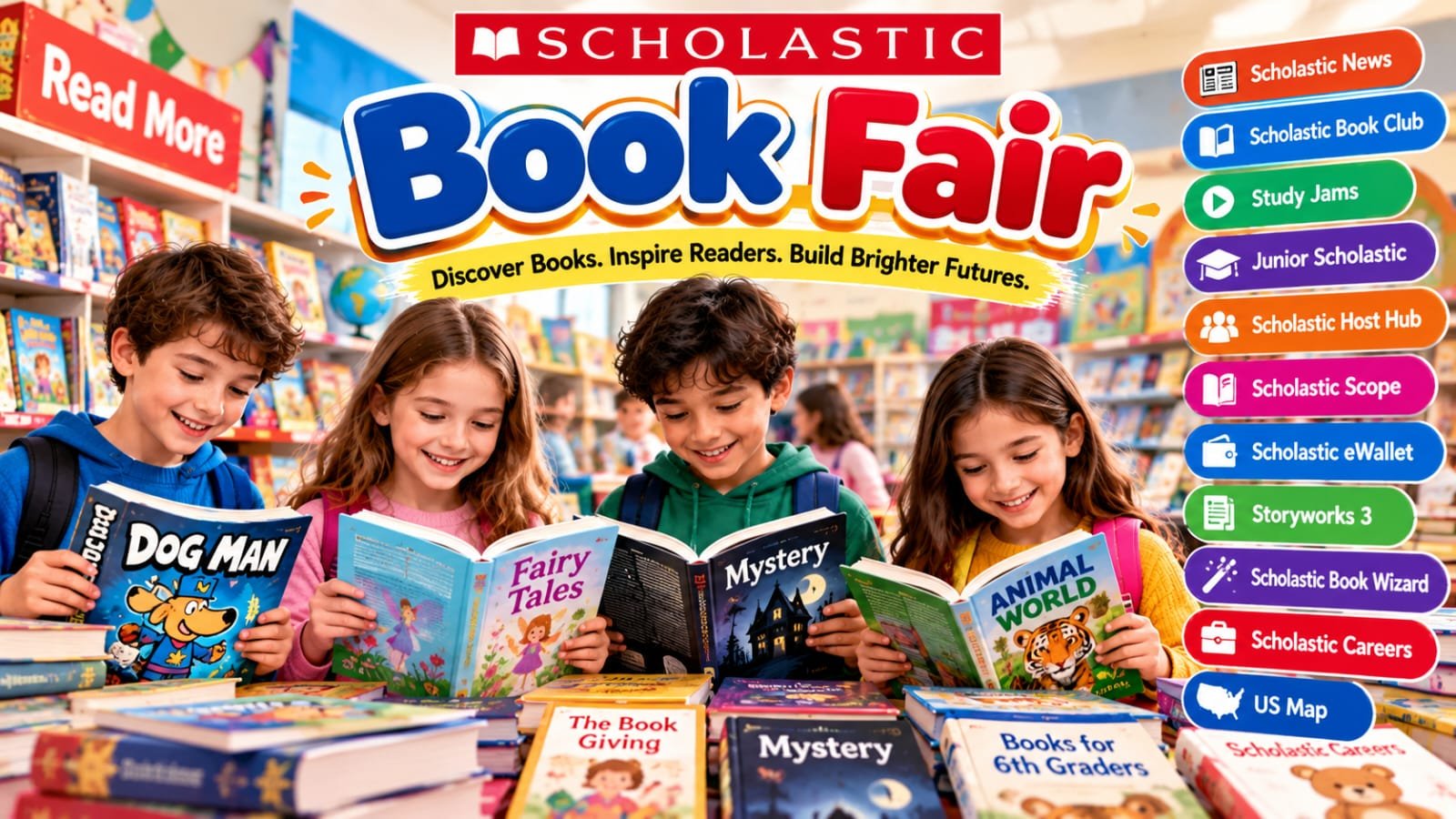
A school book fair gives students a chance to browse books, discover new authors, and choose stories that match their interests. Scholastic Book Fairs are school-based events that bring a bookstore-style selection into a school community. Depending on the event, students may find picture books, early readers, graphic novels, chapter books, nonfiction, and popular series.
For children, the best part is often being able to look through the books themselves. A student who is not excited by a reading list might become interested after spotting a funny graphic novel, an animal fact book, or the next title in a favorite series. Giving children a choice can help make reading feel personal rather than like another assignment.
The school or organizer shares event details, including dates, shopping arrangements, and payment instructions. Book selection, availability, and event format can vary, so families should use the school’s official Book Fair page for the details that apply to their child.
How Families Can Prepare for a Book Fair
Start by checking the school’s Book Fair dates and shopping schedule. If children will visit with their class, ask whether they need cash, a digital payment option, or online shopping. It also helps to discuss a spending limit before the event.
Parents can ask children to make a short wish list, but leave room for discovery. A child might arrive wanting one series and find a new author or subject that catches their attention. If cost is a concern, explain the budget clearly and encourage the child to compare prices rather than feeling pressured to buy several books.
Teachers and organizers should share reminders early, explain payment choices, and make sure families know where to find official information. Scholastic’s Host Hub provides planning guidance and materials for participating Book Fair hosts.
Scholastic News
Scholastic News is a classroom magazine resource built around age-appropriate nonfiction and current topics. It helps students read about the world beyond their immediate surroundings, from science and nature to people, places, and events. The available edition and reading level depend on the grade.
A teacher might use an article about an environmental issue for a short lesson: students identify the main idea, discuss new vocabulary, and support an answer with details from the text. Families can ask children to explain what they learned in their own words.
For official details, visit the Scholastic News website.
Scholastic Book Club
Scholastic Book Clubs connects families and teachers with children’s books selected for different ages, grades, and interests. Teachers share print or digital flyers, families choose titles, and orders are coordinated through the classroom. The current account instructions should be checked because ordering processes and offers can change.
One benefit is that families can choose books that suit a child’s interests while teachers may earn points or rewards for classroom books and resources. A Book Fair is a school event with its own schedule; Book Clubs is a classroom-linked ordering program.
For official details, visit the Scholastic Book Clubs page.
Study Jams
StudyJams is a Scholastic learning resource focused on math and science concepts. Topic-based materials can help students review an idea through visual explanations, activities, or songs, depending on the resource. It is separate from the Book Fair, but may support learning at home or in class.
After a science lesson about photosynthesis, for example, a teacher might use a related activity as review and then ask students to explain the process in their own words. Digital resources work best when they support discussion and guided practice.
For official details, visit the StudyJams website.
Junior Scholastic
Junior Scholastic is a current-events and social studies magazine resource aimed at grades 6–8. It is designed to help middle-school students understand issues, build background knowledge, and practise reading evidence. Topics and issue content vary, so educators should check the current edition.
A teacher might use an article to begin a discussion about geography, government, history, or a global event. Students can identify the central claim, distinguish facts from opinions, and connect the story to a unit they are studying.
For official details, visit the Junior Scholastic.
Scholastic Host Hub
The Scholastic Host Hub is a planning and support area for people organizing a Scholastic Book Fair. It brings together guidance for the stages before, during, and after the event, along with tutorials, promotional materials, and information about managing the fair.
Before the fair, an organizer may share event details and prepare family communications. During the event, they may need to check payment processes and help shoppers. Afterward, the school follows closeout instructions. Sign-in and available features may depend on the school’s fair setup.
For official details, visit the Scholastic Book Fair Host Hub.
Scholastic Scope
Scholastic Scope is an English language arts resource for grades 6–8. It includes a range of text types intended to develop reading, writing, discussion, and critical-thinking skills. Its mix of genres can help teachers plan lessons for students with different interests.
A class might read a feature article, discuss the author’s evidence, and write a short response using details from the text. Teachers should review current materials and confirm that they suit the grade and curriculum.
For official details, visit the Scholastic Scope website.
Scholastic eWallet
Scholastic Book Fair eWallet is a digital payment option that lets families add money for a student to spend at the fair. It can help children shop without carrying cash while parents or guardians manage the balance through a Scholastic account. Family members may also be able to contribute.
Families generally start from their school’s Book Fair homepage when setup is available, sign in or create an account, and follow the prompts. Check the balance before the child shops and agree on a budget. Official guidance explains how unused funds are handled, so confirm current rules before adding money.
For official details, visit the Scholastic Book Fair eWallet.
Storyworks 3
Storyworks 3 is a Scholastic English language arts resource designed for grade 3. It uses fiction and nonfiction texts to give young readers practice with different genres and reading skills. Teachers can use the material to guide reading, discuss main ideas, and build vocabulary.
After a nonfiction article, students might identify key details and explain how they support the main idea. After a story, they could describe a character’s choices and point to evidence. Digital features depend on the current subscription and access.
For official details, visit the Storyworks 3 website.
Scholastic Book Wizard
Scholastic Book Wizard is a name associated with tools for finding or organizing books by reading level and other details. Its current availability should be confirmed through Scholastic, because tools, names, and access routes can change.
Do not rely on one reading-level label alone. Interest, background knowledge, vocabulary, sentence length, and confidence all matter. A teacher or librarian can help match a book to a reader, and previewing a few pages can show whether the book is a good fit.
For official details, visit the Scholastic official website.
Scholastic Careers
Scholastic careers include roles connected to publishing, education, sales, customer service, warehousing, distribution, technology, and other business functions. Requirements vary by team and location, so applicants should read each job description carefully.
Someone interested in children’s publishing might look for editorial or educational sales roles, while a person with logistics experience may prefer distribution jobs. Apply through the official careers page. Scholastic warns applicants about recruitment scams: do not pay for an interview or job offer or share sensitive information with unverified contacts.
For official details, visit the Scholastic Careers.
US Map
A US map is a useful classroom companion for reading and social studies. Students can locate states, identify capitals, compare regions, and connect a news story or book setting with a real place. Maps can also help children understand distance and how geography affects daily life.
After reading a story set in another state, students can locate it, find nearby states, and describe where it sits in the country. A labeled political map helps with state names and capitals; a physical map highlights landforms and elevation.
For official details, visit the US Geological Survey National Map.
How to Get More Value from Scholastic Resources
- Start with the purpose: choose Book Fair shopping for discovering books, Book Clubs for classroom-linked orders, or a magazine/resource for lesson content.
- Check grade suitability and access requirements on the official resource page.
- Let the child’s interests and confidence guide book choices alongside reading level.
- Use official pages for payment and sign-in; avoid outdated eWallet or host-account instructions.
- Connect reading to learning by asking the child to summarize the main idea, describe a favorite part, or explain a new fact.
Conclusion
The Scholastic Book Fair gives students a chance to explore books and choose reading material that interests them. Other Scholastic services serve different needs: Book Clubs supports classroom-linked orders, eWallet helps families manage fair payments, and Scholastic News, Junior Scholastic, Scope, Storyworks 3, and StudyJams support learning in specific subjects or grades. Check official pages for current details and choose the resource that best matches the child’s age, interests, and learning goal.
FAQs
What is the Scholastic Book Fair?
It is a school-based book event where students and families can browse and buy children’s books. Dates, shopping arrangements, and available titles vary by school, so check the school’s official fair page.
How does Scholastic eWallet work?
Families use a Scholastic account and their school’s Book Fair homepage to set up a digital balance for a child. They can add funds and manage the balance, which the student can use at the fair. Review official instructions for setup and unused-fund rules.
What is the difference between a Book Fair and Scholastic Book Club?
A Book Fair is an event held at a school, usually during a set period. Scholastic Book Clubs is a classroom-linked ordering program in which families select books and teachers coordinate orders.
What is the Scholastic Host Hub used for?
The Host Hub provides planning information and support for people running a Scholastic Book Fair. It includes guidance for preparing, operating, and closing out the event, along with tutorials and promotional materials.
What grades use Junior Scholastic and Scholastic Scope?
Both are aimed at grades 6–8. Junior Scholastic focuses on current events and social studies, while Scope is an English language arts resource. Check their official sites for current offerings.
Is StudyJams part of the Book Fair?
No. StudyJams is a separate math and science learning resource. Teachers and families may use it alongside books and other learning activities.
How can I find a job at Scholastic?
Use Scholastic’s official careers page to search current openings and read each job’s requirements. Be cautious of recruitment scams and never pay for an interview or job offer.


