
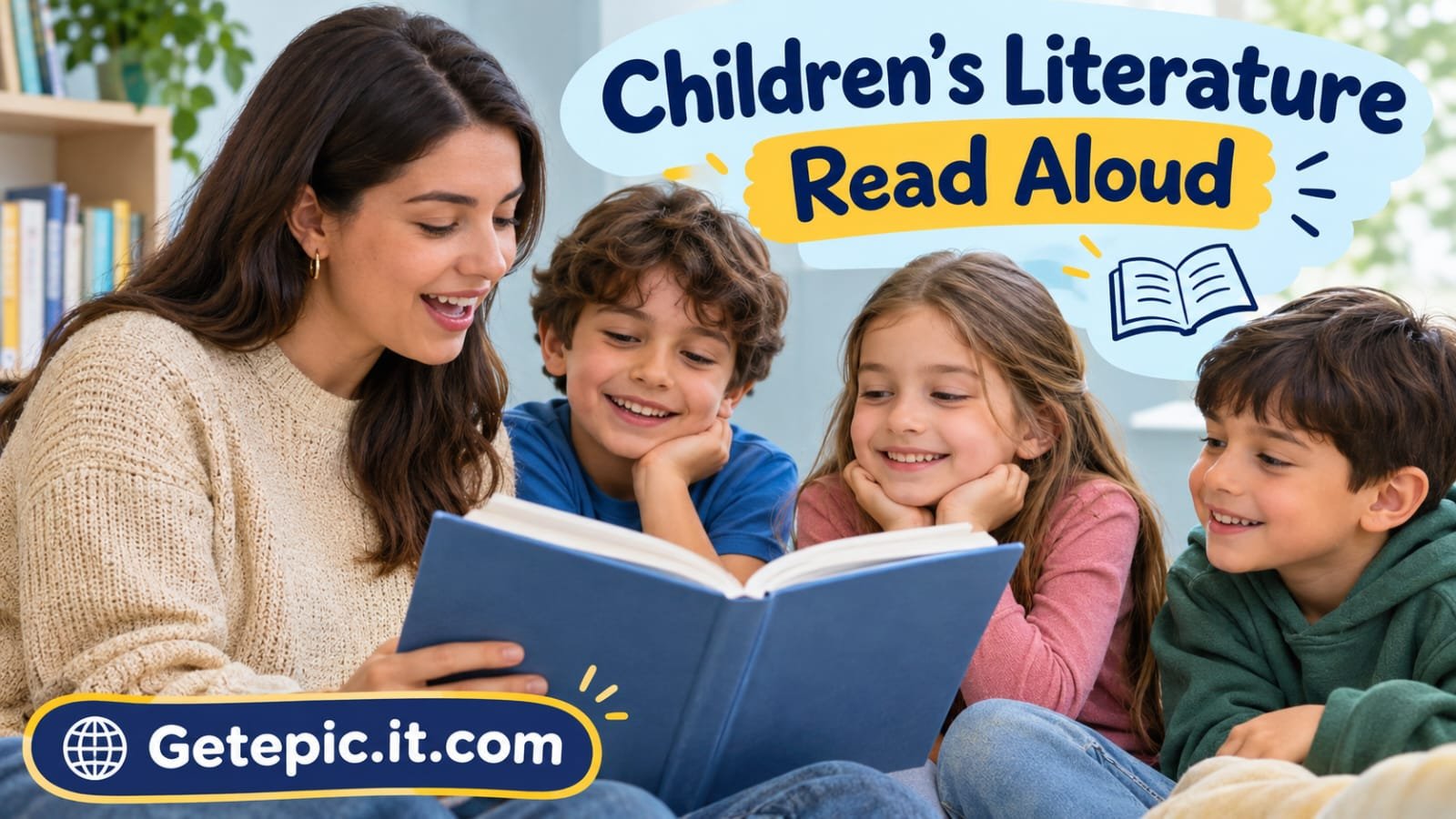
Children’s Literature Read Aloud: A Complete Guide for Parents and Teachers
Reading a story aloud to a child is one of the simplest ways to introduce them to the world of books. A good story can make children laugh, ask questions, imagine different places and learn about people they have never met. Even before children can read independently, they can enjoy books by listening to someone else read.
Children’s literature read aloud is more than simply reading words from a page. It gives children an opportunity to understand stories, discover new vocabulary, develop listening skills and connect with characters. Parents can make it part of bedtime, while teachers can use read-aloud sessions to introduce new subjects and encourage classroom discussions.
Today, children can enjoy stories in different ways. Traditional picture books, chapter books, professionally narrated digital books and audiobooks all provide opportunities to experience literature. Platforms such as Epic also make it easier to discover stories that children can listen to and follow along with.
In this guide, we will explore what children’s literature read aloud means, why it matters, how to choose suitable books and how parents and teachers can make reading sessions more enjoyable.
What Is Children’s Literature Read Aloud?
Children’s literature read aloud refers to the practice of reading books, stories, poems and other written materials aloud so children can listen and understand the content. An adult, teacher, parent or professional narrator may read the story while children follow the words and illustrations.
The main purpose is to help children experience literature without requiring them to read every word independently. This makes stories accessible to younger children, early readers and children who are still developing their reading confidence.
For example, a parent might read a picture book about animals to a four-year-old child. The parent can describe the pictures, change their voice for different characters and explain unfamiliar words. The child listens, watches the illustrations and begins to understand how a story develops.
Read-aloud experiences are not limited to picture books. Older children can enjoy longer stories, chapter books, historical fiction, poetry and informational literature. The reading material simply changes as their interests and abilities develop.
Some digital reading platforms also offer Read-To-Me books. These books combine spoken narration with on-screen text, allowing children to listen while following the words on the page.
Why Is Reading Aloud Important for Children’s Development?
Children learn through different experiences, and listening to stories can support several important areas of development. A regular reading routine gives them opportunities to hear language, understand ideas and explore subjects that may be unfamiliar to them.
1. It Helps Children Develop Vocabulary
One of the biggest benefits of reading aloud is exposure to new words. Children often hear words in stories that they do not use during everyday conversations.
A story about the ocean, for example, might introduce words such as coral, submarine, waves and underwater. Instead of memorising these words from a list, children hear them in meaningful sentences and see how they relate to the story.
Parents and teachers can make this experience more useful by briefly explaining unfamiliar words. They can also ask children to describe what they think a word means based on the surrounding sentences.
Over time, these experiences help children become more familiar with different expressions and sentence structures.
2. It Builds Listening and Reading Comprehension
Listening to a story requires children to follow events, remember information and understand how different parts of a story connect.
They learn to recognise the beginning, middle and ending of a story. They also begin to understand why characters make certain decisions and how one event can lead to another.
For example, after listening to a story about a lost puppy, a parent might ask what happened to the puppy and how the main character helped it.
These simple conversations encourage children to think about what they have heard rather than simply listening to the words.
The Institute of Education Sciences also recommends shared book reading as a way to develop children’s language, knowledge of print and understanding of the world.
3. It Encourages Imagination and Creativity
Children’s stories introduce readers to places, characters and situations beyond their everyday surroundings.
A fantasy story might take a child into a magical forest, while an adventure book could introduce distant islands, mysterious caves or unusual animals.
As children listen, they create their own mental pictures of the events. They may imagine what a character looks like, what happens next or how they would react in a similar situation.
Parents can encourage this creativity by asking questions such as, “What do you think will happen next?” or “If you were the main character, what would you do?”
There is no need to turn every story into a lesson. Sometimes allowing children to enjoy the experience and share their own ideas is enough.
4. It Develops Emotional Understanding
Stories often explore feelings and experiences that children may not yet know how to explain.
A character might feel nervous about starting school, disappointed after losing a game or excited about making a new friend. Children can recognise these emotions through the character’s actions and conversations.
This gives parents and teachers a natural opportunity to talk about feelings.
For instance, after reading a story about friendship, an adult can ask how the characters treated each other and why helping someone matters.
These conversations can help children understand different perspectives and recognise that people may experience the same situation in different ways.
5. It Creates Stronger Connections Between Adults and Children
Reading together also provides valuable time for parents, caregivers and teachers to connect with children.
A familiar bedtime story can become part of a child’s daily routine. Children may ask for the same book repeatedly because they enjoy the characters, remember favourite passages or simply like spending time with the person reading.
Teachers can create a similar experience by making shared reading part of classroom activities.
The important thing is to make reading enjoyable rather than treating every session as a test.
Different Types of Children’s Literature for Read-Aloud Sessions
Not every child enjoys the same kind of story. Some prefer colourful picture books, while others become interested in animals, science, adventures or longer fictional stories.
Choosing different types of literature helps children discover what they enjoy.
Picture Books
Picture books are often a good starting point for young children. They combine illustrations with short written passages, making stories easier to follow.
The pictures help children understand what is happening, recognise objects and connect spoken words with visual information.
Parents can point to illustrations and ask children to describe what they see. This encourages conversation and helps develop their ability to express ideas.
Fairy Tales and Traditional Stories
Fairy tales introduce children to memorable characters, imaginary settings and familiar storytelling patterns.
Stories about magical creatures, brave heroes and unusual adventures can encourage imagination while introducing ideas about kindness, courage, honesty and decision-making.
Traditional stories from different cultures also provide an opportunity to introduce children to new customs and perspectives.
Poetry and Rhyming Stories
Poetry gives children an enjoyable way to experience the sounds and rhythms of language.
Rhymes, repeated phrases and playful expressions can make reading more memorable. Younger children may enjoy repeating familiar lines, while older readers can explore how poets use words to create meaning.
Reading poems aloud also helps children notice rhythm, sound patterns and the way words work together.
Fiction and Adventure Books
Fiction allows children to explore imaginary situations through characters and events.
Adventure stories can hold their attention by introducing challenges, unexpected discoveries and exciting endings. They also provide opportunities to discuss problem-solving and character development.
As children become more confident listeners, parents and teachers can introduce longer stories with multiple chapters.
Nonfiction and Educational Books
Read-aloud sessions do not have to focus only on imaginary stories.
Nonfiction books introduce children to real subjects such as animals, space, nature, history and science. They can answer questions children already have or introduce topics they have never considered.
For example, a book about planets can encourage children to ask questions about the solar system. A wildlife book might inspire them to learn more about animals and their habitats.
Combining fiction and nonfiction gives children a wider reading experience.
How to Choose the Right Read-Aloud Books for Children
Choosing a suitable book can make a major difference to a reading session. A book that interests one child might not attract another, even when both children are the same age.
Start by considering the child’s interests. If a child enjoys dinosaurs, choose stories about prehistoric animals. If they like funny characters, look for humorous picture books or lighthearted adventures.
Age is another useful consideration, but it should not be the only factor. A child’s listening ability, background knowledge, interests and reading development also matter.
Younger children usually enjoy short stories with clear illustrations and repeated phrases. Older children may be ready for more detailed plots, longer passages and complex characters.
It is also worth checking the language and subject matter before introducing a book. The story should be appropriate for the child’s maturity and understandable enough to keep them interested.
Good read-aloud books usually have engaging storytelling, meaningful illustrations and opportunities for discussion. Most importantly, choose something that both you and the child can enjoy.
How Parents Can Make Reading Aloud a Daily Habit
Parents do not need special equipment or advanced teaching skills to enjoy stories with their children. A few minutes of regular reading can create a positive experience.
Choose a comfortable place where the child can see the book clearly. This could be a bedroom, living room or quiet corner of the house.
Try reading with expression instead of using the same voice throughout the story. You can make a character sound surprised, speak softly during a quiet moment or pause before an important event.
Allow children to interrupt with questions. If they notice something interesting in an illustration, give them time to explain what they see.
It is also helpful to avoid rushing through a story. Some children need more time to understand an unfamiliar word or follow a complicated event.
Bedtime is a popular time for reading, but it is not the only option. A short story after school, during a quiet afternoon or before a weekend activity can work just as well.
Consistency matters more than reading for a long time in one sitting. A pleasant ten-minute session can be more valuable than forcing a tired child to finish an entire book.
How Teachers Can Use Read-Aloud Literature in the Classroom
Teachers can use read-aloud sessions to introduce literature, develop language skills and encourage children to share their thoughts.
Before reading, teachers can introduce the title, author and main topic. Looking at the cover and illustrations gives students an opportunity to make predictions about the story.
During reading, teachers can pause at important moments to explain vocabulary or ask students what they think might happen next. These discussions should support the story rather than interrupt it too frequently.
After reading, students can talk about their favourite characters, describe the main problem or explain how the story ended.
Teachers can also connect books with other subjects. A story about weather can lead to a science discussion, while a book about different communities can introduce geography and social studies.
According to the Children’s Literacy Initiative, intentional read-aloud sessions can support vocabulary development, comprehension, background knowledge and children’s understanding of different text structures.
The goal is not simply to finish a book. It is to help students think, listen, respond and develop a deeper interest in literature.
Digital Read-Aloud Books and Online Children’s Libraries
Technology has introduced new ways for children to enjoy books. Families who do not always have access to a large physical book collection can explore digital libraries and narrated reading experiences.
Digital read-aloud books are particularly useful for children who are learning to recognise written words. They can listen to narration while following the text and illustrations.
One example is Epic’s digital reading platform, which offers children’s books, Read-To-Me titles, audiobooks and educational videos.
Its Read-To-Me format combines professional narration with visual pages. According to Epic’s Help Center, the words are highlighted as the narration progresses, pages turn automatically and playback speed can be adjusted.
This can help children connect spoken language with written text while enjoying a story.
Parents can explore the Epic Read-To-Me book collection to discover stories across different subjects and age groups.
The platform also provides different types of reading material, which can help families find books that match a child’s interests.
However, digital reading should be balanced with other activities. Children still benefit from conversations with adults, physical books, outdoor play and independent reading practice. A screen should support a healthy reading routine rather than replace every other reading experience.
Read-Aloud Books vs Audiobooks: What Is the Difference?
Read-aloud books and audiobooks both allow children to enjoy stories through spoken narration, but the experience is not exactly the same.
A read-aloud book usually combines narration with visible text and illustrations. Children can listen while watching the words and following the pictures.
An audiobook focuses on sound. The narrator reads the complete story, but the listener does not necessarily see the written pages.
Both formats have their own uses.
Read-aloud books can be especially helpful for younger children who are learning how spoken words connect with written language. Audiobooks can be convenient during travel, quiet time or other situations when looking at a screen or book is not practical.
Neither format needs to replace traditional reading. Parents can use them alongside printed books and opportunities for children to practise reading independently.
Common Mistakes to Avoid During Read-Aloud Sessions
Even with a good book, certain habits can make reading less enjoyable for children.
One common mistake is reading too quickly. Children need time to understand events, notice illustrations and think about unfamiliar words. A slower pace makes it easier to follow the story.
Another mistake is turning every reading session into a lesson. Asking questions can be useful, but too many interruptions may make children lose interest. Give them room to enjoy the story without constantly checking their understanding.
Parents should also avoid choosing books only because they seem educational. Entertainment is an important part of children’s literature. Funny stories, imaginative adventures and simple bedtime tales can all have a place in a child’s reading routine.
Finally, do not compare children’s reading interests or progress unnecessarily. Some children enjoy longer stories, while others prefer short picture books. Allowing them to explore different types of literature can help build lasting reading habits.
Frequently Asked Questions About Children’s Literature Read Aloud
What does children’s literature read aloud mean?
Children’s literature read aloud means reading stories, picture books, poems or other written materials aloud so children can listen and understand them. It can be done by parents, teachers or professional narrators.
What are the benefits of reading aloud to children?
Reading aloud can support vocabulary development, listening skills, comprehension, imagination and emotional understanding. It also creates opportunities for children to discuss stories and spend meaningful time with adults.
At what age should parents start reading aloud?
Parents can start reading aloud during infancy. Babies may enjoy hearing familiar voices and listening to the rhythm of language, while toddlers and older children can gradually explore more detailed stories.
How long should a read-aloud session last?
There is no fixed time for every child. Younger children may enjoy shorter sessions, while older children can listen to longer stories. The best approach is to follow the child’s attention and interest.
What types of books are best for reading aloud?
Picture books, fairy tales, poetry, adventure stories, fiction and nonfiction books can all work well. The best choice depends on the child’s age, interests, listening ability and reading development.
Are digital read-aloud books useful for children?
Yes. Digital read-aloud books can combine narration, written text and illustrations. Some platforms highlight words while narrating, helping children follow the story. They work best as part of a balanced reading routine.
Is reading aloud better than letting children read independently?
Both experiences are valuable. Reading aloud exposes children to stories and language they may not yet be able to read independently. Independent reading gives them opportunities to practise their own reading skills. A combination of both creates a more balanced experience.
Can teachers use read-aloud books in the classroom?
Yes. Teachers can use read-aloud books to introduce new vocabulary, discuss characters, explain story structure and connect literature with other subjects. Group discussions also allow students to share their ideas and interpretations.
Final Thoughts
Children’s literature read aloud gives young readers a chance to experience the enjoyment of stories while developing important language and thinking skills. It introduces new words, encourages imagination and helps children understand different characters, emotions and experiences.
Parents can make reading part of everyday family life, while teachers can use shared stories to support classroom learning. Printed books, digital read-aloud stories and audiobooks all offer useful ways to introduce children to literature.
The most important thing is to make reading a positive experience. When children find stories they genuinely enjoy, they become more curious about books and more willing to explore the world through reading.




One Comment