
Children’s Books: Best Picks by Age, Free & Classic
Children’s books are stories written for young readers, from board books for babies to novels for pre-teens. The right book at the right age builds vocabulary, confidence, and a lifelong love of reading. This guide shows you what to look for and which titles actually work.
What Counts as a Children’s Book?
Children’s books include picture books, early readers, chapter books, and middle-grade novels. Each type matches a different stage of reading.
Picture books lean on illustrations and simple text. They work best for ages 0 to 7. Chapter books drop the heavy illustration and lean into story, usually for ages 7 and up. Middle-grade novels, for ages 8 to 12, read almost like adult fiction but keep the themes age-appropriate.
Folktales are a smaller but useful category. Stories like The Three Little Pigs or Goldilocks and the Three Bears use repeated phrases and simple plots. That repetition helps new readers predict what comes next, which builds confidence fast.
Why Children’s Books Matter
A good children’s book does more than fill quiet time. A good children’s book does more than fill quiet time. New words land in context, not from a list, so they stick better. A child also learns how a story moves from beginning to end, with a clear start and finish. And for feelings a child can’t yet name — fear, jealousy, loss — a story can open that door gently, through a character instead of a lecture.
Reading together also builds connection. A parent reading aloud at bedtime gives a child full attention, something screens rarely offer in the same way.
Practical tip: Pick one book your child can “read” by memory after a few nights. That repetition is not boring to them. It’s how they learn that print carries meaning.
Best Children’s Books by Age
Here is a simple starting list, based on what consistently shows up across major lists and platforms.
- Ages 0-2: The Very Hungry Caterpillar by Eric Carle. Bright colors, simple words, sturdy board book format.
- Ages 3-5: The Cat in the Hat by Dr. Seuss. Rhyme and repetition make it easy to follow along.
- Ages 4-7: Folktales such as The Three Billy Goats Gruff and Chicken Little. Short, familiar, and great for reading aloud.
- Ages 6-9: The Story of Jumping Mouse, a Native American folktale, and Momotaro (The Peach Boy), a Japanese folktale. Both introduce children to stories from other cultures in an approachable way.
- Ages 8-12: Chapter books and middle-grade novels that build on independent reading skills, moving beyond picture support.
Mixing in folktales from different cultures, not just Western classics, gives kids a wider view of how stories get told around the world.
Free and Digital Children’s Books Worth Trying
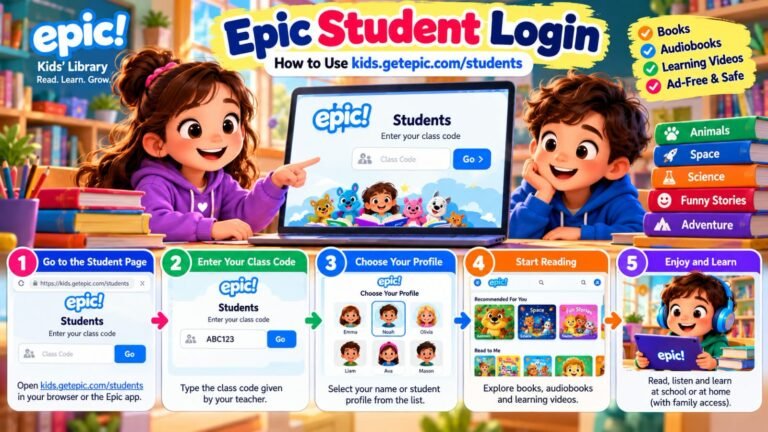
Print books still matter, but digital reading has grown fast, especially in schools. Epic is one example: it offers more than 40,000 children’s books, audiobooks, and videos from over 250 publishers, aimed at kids 12 and under. (This is an independent guide and is not official Epic content.)
Inside Epic’s “Stories” collection, you’ll find a strong folktale set: Chicken Little, Prairie Chicken Little, The Three Little Pigs, 3 Little Pigs, The True Story of the Three Little Pigs, The Three Billy Goats Gruff, The Bremen Town Musicians, Momotaro (The Peach Boy), The Story of Jumping Mouse, and Goldilocks & the Three Bears. These are useful because they show the same story type told in different versions, which helps kids compare and think a little deeper.
Digital children’s books are not better or worse than print. They are more convenient for travel and school use, and audio support helps early or struggling readers. Print books, on the other hand, reduce screen time and help with page-turning and print-direction skills young readers need. Many families use both.
How to Choose the Right Children’s Book
Age labels on book covers are a starting point, not a rule. Some five-year-olds want longer stories, and some seven-year-olds still want pictures.
Watch your child instead of the label. If they lose interest fast, the book may be too long or too wordy. If they ask for the same page twice, you found the right level.
Check for these three things before you buy or borrow:
- Clear, age-matched vocabulary
- Illustrations that match the story, not just decorate it
- A theme or lesson that fits your child’s current stage, like sharing, bedtime, or starting school
Children’s Books and Learning: What the Research Shows
Illustrations do real work in a story, not just filler around text. In picture books, studies on wordless books show they can improve a child’s own storytelling skills and keep young readers more engaged. This matters because a child “reading” pictures before they read words is still building literacy skills.
Children’s books are also a common tool in classrooms, used to teach reading, introduce new cultures, and support social-emotional lessons. This is one reason folktales stay popular in schools: they are short, clear, and easy to discuss.
FAQ
What age should a child start reading children’s books?
Reading can start at birth, with board books and read-aloud time. Babies respond to voice and pictures long before they understand words.
What are the main types of children’s books?
The main types are picture books, early readers, chapter books, and middle-grade novels, each matched to a reading stage.
Are digital children’s books as good as print?
Both work well. Digital books add audio support and convenience, while print books help with page handling and reduce screen time.
How many children’s books should a child own?
There’s no fixed number. A rotating stack of 15 to 30 favorites is enough for most young children to stay engaged without feeling overwhelmed.
Why are folktales good children’s books for beginners?
Folktales use repeated phrases and simple plots, which help new readers predict and follow along, building confidence quickly.
Your Next Step
Pick one book from the age list above and read it with your child tonight. Watch which parts hold their attention, then build your next pick around that.
Explore More:
What Is the CH Sound in Phonics and How Can Kids Learn It Easily?